
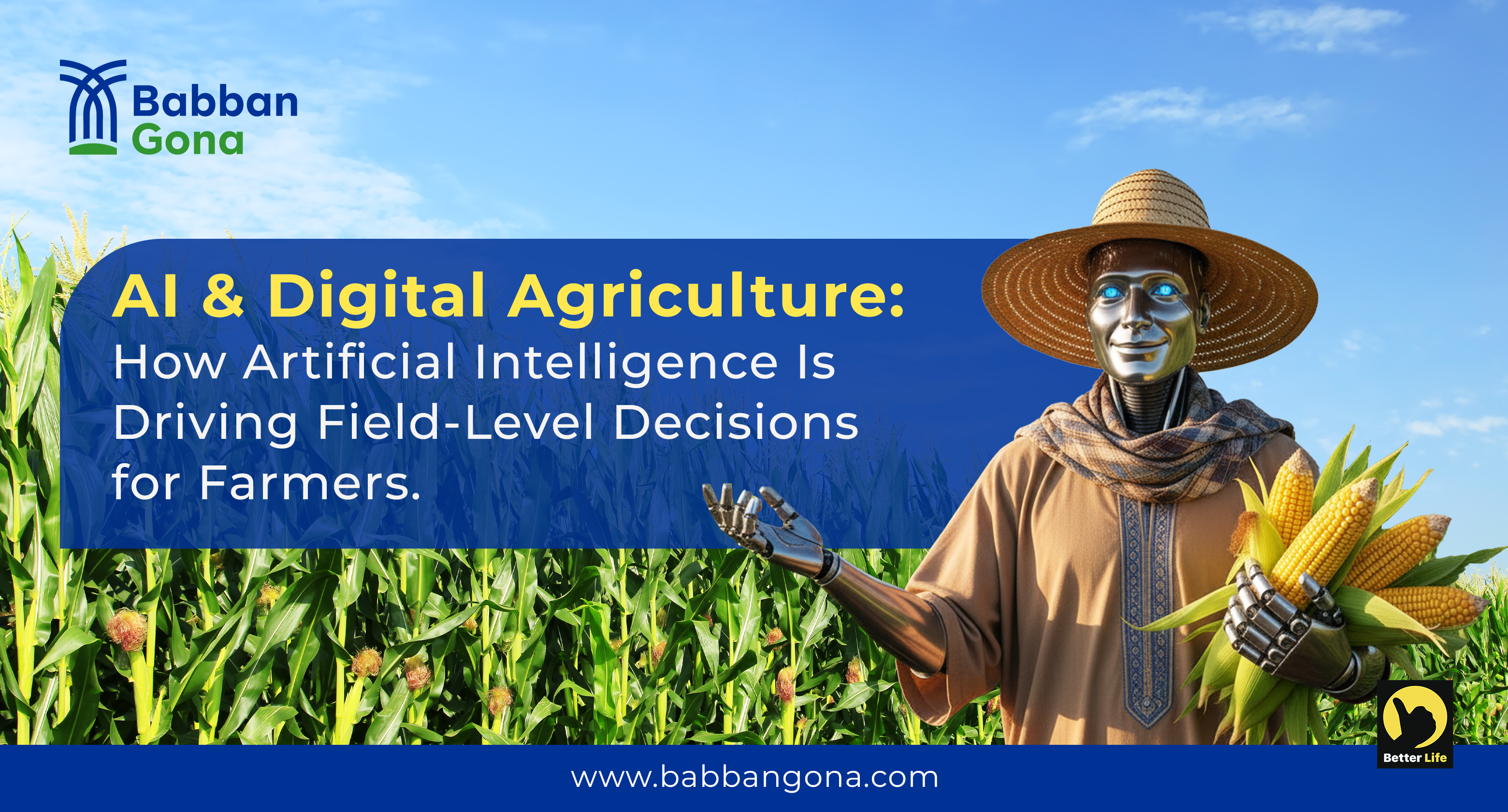
For generations, farming decisions were guided by experience; reading the soil by touch, watching the skies, and applying knowledge passed down over time. While this intuition remains invaluable, today’s farmers are operating in a far more complex environment shaped by climate variability, rising input costs, and market uncertainty.
This is where Artificial Intelligence (AI) and digital agriculture are beginning to play a transformative role, supporting farmers with timely, data-backed insights that strengthen decision-making at the field level.
From Experience-Based Farming to Intelligence-Driven Agriculture
Modern agriculture is no longer just about what has worked before; it is increasingly about what will work best now. AI enables this shift by analyzing large volumes of agricultural data such as soil characteristics, weather patterns, crop performance, and field observations and translating them into practical guidance.
At Babban Gona, digital agriculture is not about replacing the farmer’s knowledge. It is about augmenting it, ensuring that every decision from planting to harvest is informed, precise, and context-specific.
How AI Supports Field-Level Decisions
- A “Digital Agronomist” Supporting Farmers on the Ground
Through digital tools and data-driven advisory systems, farmers can now receive agronomic recommendations that are tailored to their specific fields. For example, field data and visual assessments can help identify early signs of nutrient deficiencies or pest pressure, allowing for early and targeted interventions.
This reduces unnecessary chemical use, lowers production costs, and protects crop health while still relying on human extension support to guide final decisions.
- Precision Input Use
Traditional farming often relies on generalized advice: one fertilizer rate, one planting window, one approach for all. AI helps move beyond this by factoring in soil condition, crop type, and historical yield data to recommend appropriate input levels for specific locations.
This precision improves efficiency, supports soil sustainability, and ensures farmers apply only what is needed, no more, no less.
- Smarter Weather and Climate Planning
Unpredictable weather remains one of the biggest risks facing smallholder farmers. AI-powered climate analysis supports better planning by identifying trends and potential risks, helping farmers decide when to plant, irrigate, or harvest.
These insights contribute to stronger climate resilience, particularly in regions where rainfall variability directly impacts yields.
- Yield Forecasting and Better Farm Planning
AI models can estimate expected yields based on field conditions and crop performance trends. These insights support better planning, helping farmers make informed decisions about storage, aggregation, and market engagement.
Making AI Work for Smallholder Farmers
Technology alone does not transform agriculture; access, relevance, and trust do. Digital tools are most effective when they are simple, localized, and integrated with human support systems.
At Babban Gona, AI-driven insights complement field officers, training programs, and farmer networks, ensuring technology works for farmers, not the other way around.
The Future of Intelligent Farming
As digital agriculture continues to evolve, AI will play an even greater role in shaping sustainable and inclusive food systems. From personalized advisory to improved risk management, intelligent tools will help farmers navigate uncertainty with greater confidence.
By enabling smarter field-level decisions, Babban Gona continues to move closer to its mission of empowering farmers to build resilient livelihoods and prosperous communities.